Robotics Shop BD - one-stop shop for robotics, electronics, and PCB printing services in Bangladesh. Get best quality parts with warranty & expert tech support.
Voice-Controlled Smart Navigation Robot for Visually Impaired People
(0)
12
In Stock
৳20,000
Details description
The Voice-Controlled Smart Navigation Robot for Visually Impaired People is an intelligent IoT and embedded systems-based assistive robotic project designed to help visually impaired and elderly users navigate their surroundings more safely and independently. The system combines voice recognition, obstacle detection, audio feedback, wireless/embedded control, and robotic mobility into a compact smart navigation platform.
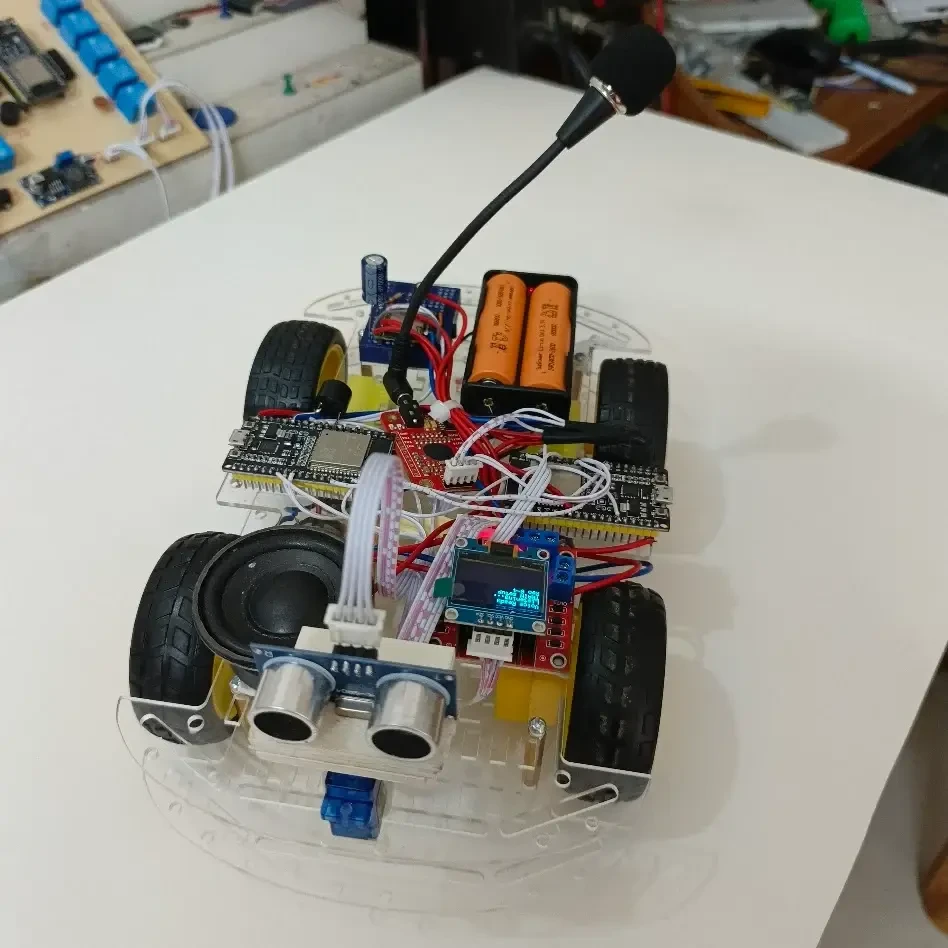
The robot is built around an ESP32-based control system and integrates a microphone/voice input module, ultrasonic distance sensing, speaker-based audio feedback, motor control, and a rechargeable battery-powered robotic chassis. Instead of depending entirely on manual control, the user can provide simple voice commands such as Forward, Backward, Left, Right, and Stop, allowing the robot to respond to the user's instructions and move accordingly.
A key feature of the system is its real-time obstacle detection capability. An ultrasonic sensor continuously measures the distance between the robot and nearby objects. When an obstacle is detected within a predefined safety range, the controller can prevent unsafe forward movement and provide an audible warning to the user. This makes the system particularly useful as an educational prototype for assistive technology, smart robotics, human-machine interaction, and autonomous navigation research.
The combination of voice control and obstacle detection makes this project more than a conventional robotic car. It demonstrates how Artificial Intelligence (AI), voice recognition, IoT technology, embedded programming, and robotics can be integrated to develop practical solutions for people with visual impairments.
Key Features
Feature
Description
Voice Control
Allows the user to control robot movement using predefined voice commands.
Obstacle Detection
Ultrasonic sensing continuously monitors the path for nearby obstacles.
Automatic Safety Response
The robot can stop or restrict forward movement when an obstacle is detected.
Audio Feedback
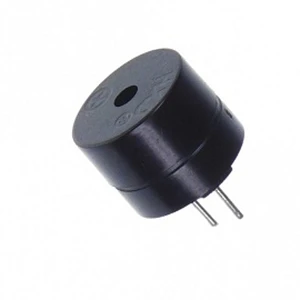
A speaker provides voice or sound-based notifications to the user.
ESP32-Based Control
ESP32 provides processing, communication, and control functions.
Smart Navigation
Combines user commands with environmental sensing for safer movement.
Motorized Mobility
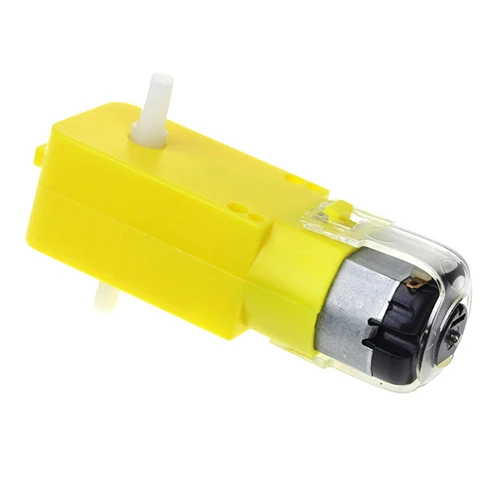
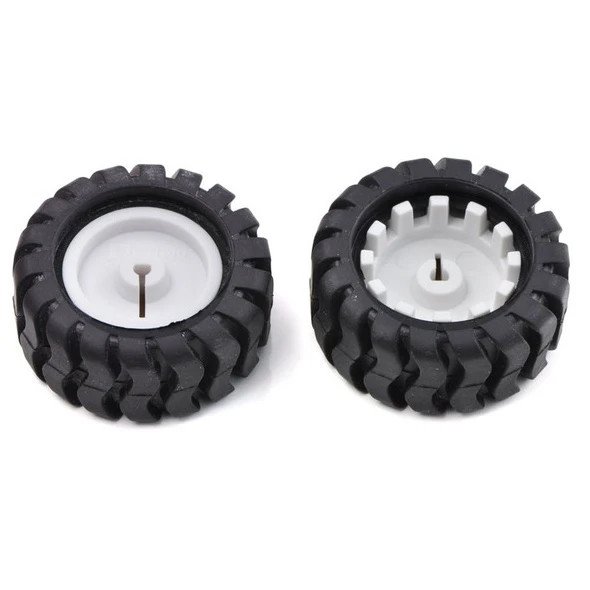
Multiple DC motors provide movement and directional control.
Portable Power System
Battery-powered design allows the robot to operate without a fixed power source.
Assistive Technology
Designed as a prototype concept for visually impaired and elderly users.
Expandable Architecture
Additional sensors, GPS, AI models, or wireless features can be integrated.
How the System Works
The system starts by continuously monitoring voice input from the user. When a recognized command is received, the ESP32 microcontroller processes the command and determines the required movement. For example, a "Forward" command instructs the motor controller to drive the robot forward, while "Left" or "Right" commands activate the appropriate motors to change direction.
At the same time, the ultrasonic sensor continuously checks the surrounding environment. This is an important safety layer because the robot does not simply follow a movement command without considering obstacles. If an object is detected at a potentially unsafe distance, the controller can immediately stop the motors or prevent the robot from moving further toward the obstacle.
The audio system can then provide an alert such as an obstacle warning, allowing the user to understand the current situation without depending on a visual display.
This approach creates a basic human-machine interaction system, where the user communicates with the robot through voice while the robot uses sensors to understand environmental conditions.
Technology Used
The project demonstrates several important areas of modern engineering and technology:
ESP32 Embedded System
Voice Recognition
Artificial Intelligence and Speech Processing
Ultrasonic Distance Measurement
Obstacle Avoidance
DC Motor Control
Audio Feedback System
Battery-Powered Robotics
IoT and Wireless Communication
Assistive Technology
Human-Robot Interaction
Embedded C/C++ Programming
Voice-Controlled Navigation
Voice interaction is one of the most important aspects of this project. A predefined set of commands can be trained or configured so that the robot can recognize instructions such as:
FORWARD → BACKWARD → LEFT → RIGHT → STOP
This provides a simple and natural interface for users who may find conventional remote controllers or smartphone interfaces difficult to use.
For more advanced versions, the system can be upgraded with AI-based speech recognition and natural-language processing, allowing the robot to understand a wider range of commands rather than relying only on fixed keywords.
Obstacle Detection and Safety
The ultrasonic sensor acts as the robot's environmental awareness system. It sends an ultrasonic pulse and measures the returning echo to calculate the distance to an object.
If the measured distance falls below a predefined safety threshold, the controller can:
Stop the robot.
Prevent forward movement.
Generate an audible warning.
Allow the user to issue another navigation command.
Optionally perform automatic direction selection in an advanced version.
This safety mechanism is particularly important in an assistive navigation robot because simply responding to a voice command is not sufficient—the system should also consider the physical environment.
Potential Applications
This type of smart navigation robot can be developed for several applications, including:
Assistive robotics for visually impaired people
Educational robotics projects
University engineering projects
IoT and embedded systems research
AI-based navigation experiments
Human-machine interaction research
Elderly assistance systems
Indoor robotic navigation
Voice-controlled robotic platforms
Smart mobility and accessibility research
Future Development
The prototype can be further developed into a more advanced AI-powered autonomous navigation assistant. Possible improvements include GPS/GNSS positioning, multiple ultrasonic sensors, LiDAR, IMU-based navigation, camera-based object detection, AI computer vision, indoor mapping, Bluetooth/Wi-Fi connectivity, mobile application control, and advanced voice recognition.
A camera and AI model could be incorporated to identify objects such as people, doors, stairs, vehicles, and other obstacles. GPS integration could provide outdoor location information, while an IoT platform could enable remote monitoring and data logging.
With these improvements, the project can evolve from a basic voice-controlled robotic car into a more sophisticated AI-powered assistive navigation system.
Why This Project Is Significant
The project demonstrates how IoT, AI, robotics, embedded systems, and sensor technology can be combined to address a real-world accessibility challenge. Rather than developing a conventional robot car only for demonstration, the system focuses on human-centered robotic assistance, where voice interaction and environmental sensing work together to improve safety and usability.
IdeaToProject works with this type of Arduino, ESP32, IoT, AI, robotics, automation, embedded systems, and final-year project development, including customized academic prototypes, research-oriented hardware systems, circuit design, programming, and project documentation.

 English